What side to sleep on is best for heart?
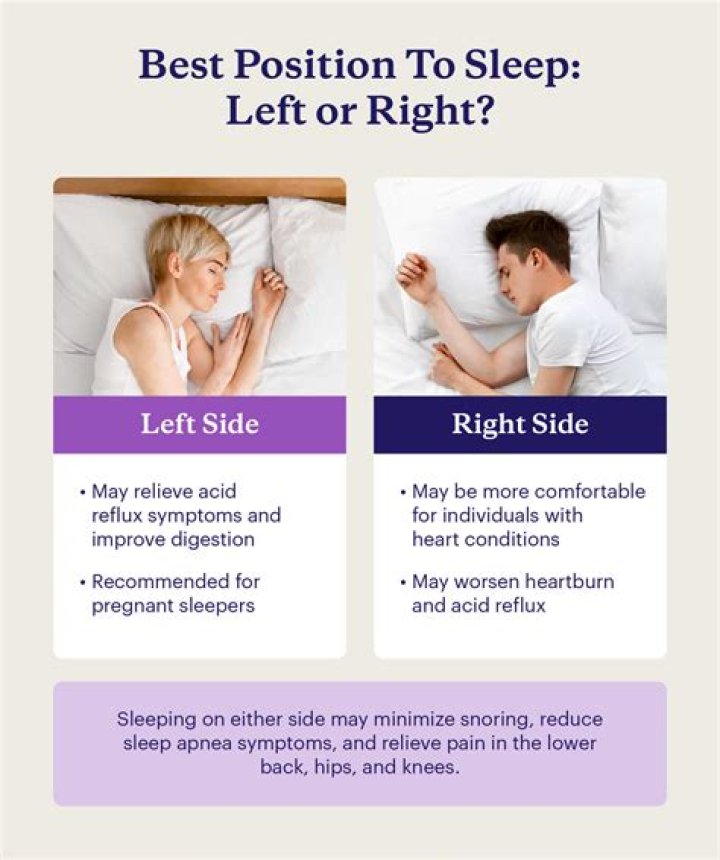
Similarly, sleeping on your left side, specifically, could help the flow of blood to your heart. When your heart pumps blood out to your body, it gets circulated and then flows back to your heart on the right side, Winter explains.
How do you sleep with heart problems?
Here are 5 things to try if you have heart failure and are struggling to get a good night's sleep.
- Get screened for sleep apnea. ...
- Sleep on your side. ...
- Elevate the head of your bed. ...
- Elevate your feet. ...
- Avoid sleeping flat on your back, unless you have a CPAP machine.
Are heart problems worse at night?
Studies have found that elevated nighttime blood pressure is tied to overall hypertension (high blood pressure). In fact, nocturnal blood pressure has been found to be even more predictive of heart problems than high blood pressure during the day.
How do I stop heart palpitations when lying down?
You can lower your risk of heart palpitations at night by eating right, avoiding alcohol and nicotine, and staying away from caffeine before bed. Try yoga and meditation to reduce stress and help you relax. Get help right away if heart palpitations happen along with chest pain, dizziness or shortness of breath.
Mayo Clinic Minute: Sleep and your heart
Does sleeping on your left side cause heart problems?
Even though lying on your left side may change your heart's electrical activity, there's no evidence that it increases your risk of developing a heart condition if you don't already have one.
Is sleeping on your left side better for your heart?
We recommend sleeping on the right side since it may be the key to a healthier heart. Studies suggest it reduces pressure on the heart and stabilizes your blood pressure and heart rate.
Why you should not sleep on your right side?
One notable drawback to sleeping on your side is that it can increase your risk of shoulder pain. Whether you're on your left or right side, the corresponding shoulder can collapse into the mattress as well as up toward your neck, creating misalignment and pain the next morning.
What is the healthiest sleeping position?
Sleeping on your back offers the most health benefits. It protects your spine, and it can also help relieve hip and knee pain. Sleeping on your back uses gravity to keep your body in an even alignment over your spine. This can help reduce any unnecessary pressure on your back or joints.
What happens when you sleep on your left side?
Sleeping on the left side is recommended for pregnant people. Sleeping on this side improves blood flow between the heart, fetus, uterus, and kidneys, while keeping pressure off the liver. If you get uncomfortable, physicians recommend switching to the right side for a short while rather than sleeping on your back.
What is the best sleep position for AFIB?
A left lateral recumbent position increases the dimensions of the left atrium and the right pulmonary veins and thereby increases local myocardial stress (Wieslander et al., 2019).
How should I sleep to avoid chest pain?
Sleeping. Lie on your side with a pillow between your legs and your head elevated with pillows. Keep your back straight. Lie on your back with your head elevated and your knees bent, with a pillow under your knees.
How do you check for a heart blockage at home?
Place your index and middle finger of your hand on the hollow part of your inner wrist of the other arm, just below the base of the thumb. You should feel a tapping or pulse against your fingers, that is your heartbeat. Look at your watch and count the number of taps you feel in 10 seconds.
Can sleeping position cause chest pain?
Injury to the Chest Wall
If the muscles and bones of your chest wall have been strained or injured in some way, any type of movement of your torso can cause pain. As a result, you may experience chest pain while you are sleeping, particularly if you frequently change positions or fall asleep on your chest.
Why do I get heart palpitations when I lay on my left side?
Lying on your left side can stimulate the vagus nerve, sending abnormal electrical signals to the heart causing palpitations. It is a harmless reaction and if it worries you, change position or avoid lying on your left side.
Why do most heart attacks happen when getting out of bed?
Getting Out of Bed in the Morning
Heart attacks are more common in the morning. Your brain floods your body with hormones to help you wake up, and that puts some extra stress on your heart. You may also be dehydrated after a long sleep, which can make your heart work harder, too.
How do I know if my heart is OK?
Blood Tests
A blood test can measure levels of your cholesterol, including LDL "bad" cholesterol and HDL "good" cholesterol. It can also help diagnose other conditions such as anemia or thyroid disease that can affect your heart.
Which drink is best for heart?
Drink: Water
Plain old water might be the best thing to drink for overall health, and that includes your heart.
How can I tell if my arteries are clogged?
Do clogged arteries cause any symptoms?
- Chest pain.
- Shortness of breath.
- Heart palpitations.
- Weakness or dizziness.
- Nausea.
- Sweating.
What does a small heart blockage feel like?
Mini heart attack symptoms include:
Chest pain, or a feeling of pressure or squeezing in the center of the chest. This discomfort may last several minutes: It may also come and go. Pain may be experienced in the throat. Symptoms may be confused with indigestion or gastroesophageal reflux disease (GERD).
Why do cardiac arrests happen in the bathroom?
Using the toilet
If your heart function is already compromised, this could be a trigger for sudden cardiac arrest. Going to the bathroom can also trigger something called a vasovagal response. Using the bathroom puts pressure on the vagus nerve, which can sometimes slow your heart rate.
What is a cardiac cough?
If you have a long-term cough with congestive heart failure, that cough is something to pay attention to. It's called a cardiac cough and it may indicate that: Your heart condition is getting worse. Treatment isn't working as well as it needs to be. You're having side effects from your heart-failure medication.
What triggers AFib during sleep?
A: It's not uncommon for atrial fibrillation (AFib) to occur at night. The nerves that control your heart rate typically are in sleep mode, and that's when your resting heart rate drops. Under these conditions, pacemaker activity from areas other than the normal pacemaker in the heart can trigger the onset of AFib.
How do I stop atrial fibrillation at night?
6 Ways to Stop an AFib Episode
- Engage in deep, mindful breathing. ...
- Get some exercise. ...
- Valsalva maneuver. ...
- Practice yoga. ...
- Put some cold water on your face. ...
- Contact a health professional.
What can trigger atrial fibrillation?
Certain situations can trigger an episode of atrial fibrillation, including:
- drinking excessive amounts of alcohol, particularly binge drinking.
- being overweight (read about how to lose weight)
- drinking lots of caffeine, such as tea, coffee or energy drinks.
- taking illegal drugs, particularly amphetamines or cocaine.